

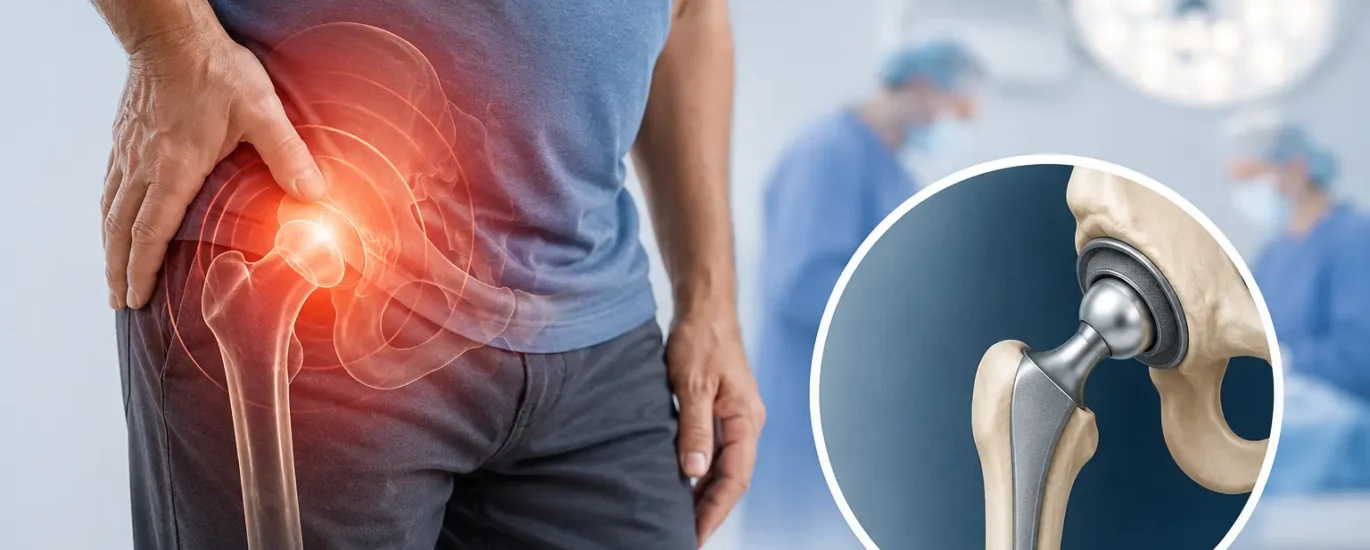
Hip pain can gradually become a part of everyday life. At first, simple measures such as rest, exercise, medicines, or physiotherapy may provide relief. But when hip pain and stiffness become severe and start affecting walking, sleep, work, or routine activities, hip replacement surgery may be considered.
The decision is not based on age alone. Your symptoms, hip joint condition, overall health, and response to other treatments all play an important role.
What Is Hip Replacement Surgery?
Hip replacement, also called total hip replacement, is a procedure in which damaged parts of the hip joint are replaced with artificial components. It is most commonly performed for severe hip osteoarthritis, but other hip conditions may also require surgery.
The main goal is to reduce pain, improve movement, and help you return to daily activities more comfortably.
When Is Hip Replacement Recommended?
An orthopedic specialist may recommend hip replacement surgery when:
- Hip pain is persistent or severe.
- Pain interferes with walking, climbing stairs, sitting, or sleeping.
- Hip stiffness significantly limits movement.
- Daily activities become difficult or require assistance.
- X-rays or other investigations show significant joint damage.
- Non-surgical treatments no longer provide enough relief.
- Hip arthritis is causing significant disability and affecting your quality of life.
In general, surgery is considered when the benefits of replacing the damaged joint are expected to outweigh the risks.
Conditions That May Lead to Hip Replacement
Osteoarthritis: This is the most common reason for hip replacement. As cartilage wears down, the joint can become painful and stiff.
Rheumatoid arthritis: This inflammatory condition can damage the hip joint and cause ongoing pain and loss of movement.
Hip injury or fracture: Serious damage following a fall, accident, or other injury may sometimes require hip replacement.
Other forms of joint damage: Certain conditions, including advanced damage to the hip joint from other causes, may also make replacement necessary.
Should You Try Non-Surgical Treatment First?
Not everyone with hip pain needs surgery. Depending on the severity of the condition, doctors may first recommend treatments such as:
- Physiotherapy and strengthening exercises
- Low-impact activities such as swimming or cycling
- Weight management when appropriate
- Pain-relieving medicines when medically suitable
- Walking aids if needed
- Certain injections for temporary pain relief
These approaches can help reduce pain and improve function, particularly in mild to moderate hip osteoarthritis.
However, if appropriate non-surgical treatment has been tried and pain and disability continue, hip replacement may become a reasonable option.
What Are the Benefits of Hip Replacement?
For suitable patients, hip replacement can provide significant benefits, including:
- Less hip pain
- Improved mobility
- Better ability to perform daily activities
- Improved sleep and comfort
- Greater independence
- Better overall quality of life
Most people experience less pain and improved movement after successful hip replacement, although recovery and results vary from person to person.
When Should You See an Orthopedic Specialist?
Consider consulting an orthopedic specialist if hip pain lasts for several weeks, keeps returning, or is gradually getting worse.
You should particularly seek an evaluation if pain is affecting your sleep, walking, work, exercise, or other normal activities. An orthopedic specialist can assess your symptoms, examine your hip, review imaging when necessary, and discuss whether conservative treatment or surgery is appropriate.
Frequently Asked Questions
- Is hip replacement recommended only for older people?
No. Age alone does not determine whether someone needs hip replacement. The severity of joint damage, symptoms, functional limitations, overall health, and response to treatment are important factors.
- Do I need surgery if I have hip arthritis?
Not necessarily. Many people with mild or moderate hip arthritis can manage symptoms with exercise, physiotherapy, lifestyle changes, and appropriate medication. Surgery may be considered when symptoms become severe and other treatments are no longer effective.
- How do I know if my hip pain is severe enough for replacement?
If pain and stiffness are significantly limiting your daily activities, disturbing sleep, affecting walking, or continuing despite appropriate non-surgical treatment, it is worth discussing hip replacement with an orthopedic specialist.
- How long does a hip replacement last?
Modern hip replacements can provide long-term relief and function. The NHS notes that a hip replacement can last at least 15 years, although implant longevity varies between individuals.
Conclusion
Hip replacement surgery is generally considered when hip pain and stiffness become severe, joint damage is significant, and non-surgical treatments no longer provide adequate relief. The right timing is different for every person and should be decided after a detailed evaluation by an orthopedic specialist.
If persistent hip pain is making everyday activities difficult, don’t ignore it. Consult an orthopedic specialist to understand the cause of your pain and discuss the treatment options that may be right for you.